Most dog owners know grooming matters. Fewer know exactly how often their dog actually needs it, and the answer looks very different depending on what kind of coat your dog has. A Cockapoo left eight weeks without a groom starts to mat. A Labrador at the same interval is perfectly fine. A Husky clipped by a groomer who does not understand double coats can end up with lasting coat damage. Getting the frequency right, and understanding why it varies, makes a real difference to your dog's comfort, coat health, and how manageable they are to look after at home. This post covers every coat type, what home brushing should sit alongside professional appointments, and how your dog's lifestyle shapes the whole picture.
Date
May 26, 2025
Author
Jade
READING TIME
5 minute read
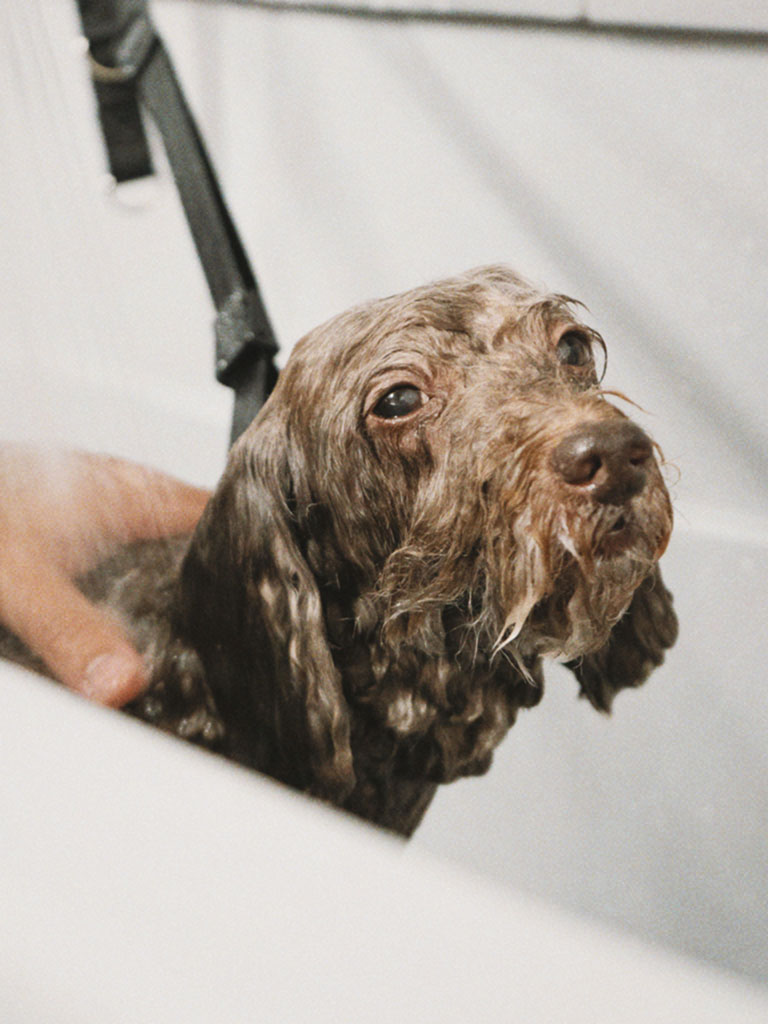
Dogs with continuously growing coats, such as Poodles, Bichon Frises, Shih Tzus, and most Doodle crosses, need a full groom every six to eight weeks. Left longer than that, the coat grows beyond the point where it can be maintained comfortably. Tangles form, particularly around the ears, armpits, and groin, and what starts as a manageable coat can become matted surprisingly quickly. For these breeds, our clip and scissor finish groom keeps the coat at a comfortable, manageable length.
The six to eight week window is a general guide. Some dogs grow faster, some slower. Your groomer will advise on the right frequency after the first visit based on your dog's coat, how it develops, and their lifestyle.
Breeds like Golden Retrievers, Border Collies, Huskies, and German Shepherds have a dense undercoat beneath a protective outer coat. A professional groom every eight to twelve weeks keeps the undercoat healthy and manageable, though dogs who shed heavily or spend a lot of time outdoors may benefit from coming in more frequently.
The purpose of grooming a double-coated breed is different from grooming a clipped dog. The focus is on removing dead, loose undercoat that, if left to build up, can cause matting, reduce air circulation to the skin, and increase shedding significantly around the house. The outer coat is left entirely intact.
One thing worth knowing: double-coated breeds should never be clipped. Cutting the coat removes the protective topcoat and disrupts its natural ability to regulate temperature and protect against the elements. A professional groomer will brush and remove loose undercoat while leaving the outer coat as nature intended.
Our double-coat care groom is built around exactly this, removing the loose undercoat while leaving the protective topcoat intact.
Short-haired breeds like Labradors, French Bulldogs, Beagles, and Staffordshire Bull Terriers are often left out of the grooming conversation, but they benefit from regular professional grooming too. Every ten to twelve weeks works well for most. A professional groom removes dead hair, promotes healthy skin, and gives your groomer the chance to spot anything on the skin or coat that can easily go unnoticed at home. For heavy shedders, regular grooming also makes a real dent in the amount of hair your dog leaves around the house. Our short-haired breeds groom covers exactly this kind of regular maintenance.
Breeds with skin folds, such as Bulldogs, Pugs, and Shar Peis, need particular attention. Dirt and bacteria accumulate in the folds and can cause irritation and infection if they are not cleaned regularly. For these breeds, as part of every groom at Hackney Barkers, we apply a natural botanical cleanse to the facial folds to keep the skin fresh and healthy.
Wire-haired breeds, including many Terriers, Schnauzers, and Spaniels, are traditionally maintained through hand stripping rather than clipping. The technique removes dead coat by hand to allow new, healthy hair to grow through naturally, preserving the coat's texture, colour, and protective qualities.
For most wire-haired breeds, hand stripping every eight to twelve weeks is the right range. Dogs on a rolling coat maintenance programme may need attention every six to eight weeks. Your groomer will assess the coat after the first visit and advise on what works best for your dog's coat, how it develops, and their lifestyle.
Not every dog is suitable for hand stripping. Grooming history, age, and factors like neutering can all affect whether the technique is appropriate. A proper assessment before booking is essential. Find out more about our hand stripping services.
Coat type sets the baseline, but lifestyle shapes the reality. A dog that swims regularly, runs through undergrowth, or spends a lot of time in fields and muddy parks will pick up debris, develop tangles faster, and generally need more attention than a dog with a quieter routine.
For active dogs, a shorter cut is often the most practical choice. It is easier to maintain at home, dries faster after a swim, and is far less likely to knot between appointments. Your groomer can advise on a length that suits your dog's lifestyle rather than just their breed standard.
For dogs whose owners want to keep the coat longer, more frequent visits to the salon help. A wash and blow dry between full grooms keeps the coat knot-free and in good condition, and is a much better option than waiting for the coat to deteriorate or trying to work through tangles at home.
Regular brushing at home is as important as professional grooming. It removes loose hair, prevents tangles from forming, keeps the coat in good condition between appointments, and builds familiarity with being handled, which makes every salon visit easier for your dog.
The right tools matter. A slicker brush works well for most coat types, but a metal comb is what tells you whether you have actually got through to the skin rather than just the surface of the coat. If the comb moves freely from root to tip without catching, the coat is tangle-free. If it snags, there is work to do.
If you are unsure which tools are right for your dog's coat, ask your groomer. They will tell you exactly what to use and how.
Nail clipping sits on a different schedule to everything else. Most dogs benefit from having their nails clipped once a month, though active dogs who walk regularly on concrete will naturally wear their nails down and may need it less frequently. Overgrown nails push back against the paw as the dog walks, which over time affects posture and can lead to joint strain. It is a small thing that makes a real difference to your dog's long-term comfort. If you need a standalone appointment, our nail clipping service is available as a walk-in.
The earlier you start, the better. Puppies can begin grooming as soon as they are fully vaccinated, and the first experiences matter more than most owners realise. A puppy introduced to grooming calmly and gradually, at their own pace and with plenty of encouragement, is far more likely to be relaxed about it as an adult. One that is left until their coat genuinely needs attention often finds the whole process much harder. Our Puppy Intro Pack is designed specifically for this, a gentle three-session programme to build confidence from the very first visit.
For dogs with growing coats, the main risk is matting. Mats form when loose hair tangles and knots together, often in areas of friction like the ears, armpits, and behind the legs. Mild matting can sometimes be worked through, but severe matting cannot safely be brushed out. In those cases, shaving the affected areas is the kindest option, which may significantly affect the style of the groom.
Going beyond the recommended interval occasionally is not a crisis. Making a habit of it tends to mean the coat is in worse condition each time your dog comes in, which makes the groom longer, harder, and less comfortable for your dog.
The simplest approach is to book the next appointment before you leave the salon. Your groomer will suggest an interval based on your dog's coat and lifestyle, and booking ahead means you are not scrambling to get in when the coat is already overdue.
Cockapoos have a continuously growing coat that typically needs a full groom every six to eight weeks. Because the coat is a cross between a Poodle and a Cocker Spaniel, texture and growth rate vary between dogs. Your groomer will advise on the right frequency after the first visit based on your dog's coat, how it develops, and their lifestyle.
Labradors are a short-haired, double-coated breed and benefit from a professional groom every ten to twelve weeks. While their coat looks low maintenance, regular grooming removes dead hair and loose undercoat, promotes healthy skin, and significantly reduces shedding. Heavy shedders may benefit from more frequent visits.
For short-haired breeds, three months is generally fine. For dogs with continuously growing or double coats, leaving it that long regularly risks matting and coat deterioration, and tends to make each appointment harder. Six to eight weeks is the standard recommendation for most growing coats.
Grooming frequency does not need to change significantly with the seasons, but summer brings its own considerations. Double-coated dogs benefit from a thorough brush-out before the warmer months to remove loose undercoat and improve air circulation to the skin. Active dogs who spend more time outdoors may also benefit from more regular visits to keep the coat clean and tangle-free.
Yes, and it makes a real difference. Regular brushing prevents tangles from forming, removes loose hair, and keeps the coat in good condition between appointments. A slicker brush and a metal comb are the most useful tools for most coat types. The comb is the real test: if it moves freely from root to tip without catching, the coat is genuinely knot-free. Ask your groomer which tools are right for your dog's specific coat.
Puppies can start gentle grooming introductions as soon as they are fully vaccinated. In the early months the focus is on building familiarity with the salon, the tools, and the process rather than the groom itself. Once the adult coat comes through, the regular grooming schedule for their coat type applies.
Once a month works well for most dogs. Active dogs who walk frequently on hard surfaces may naturally wear their nails down and need less frequent clipping. If you can hear the nails clicking on hard floors, they are ready for a clip.
Author: Written by Jade, lead groomer and founder of Hackney Barkers.
Published: April 2026
Last reviewed: April 2026
July 10, 2026
July 6, 2026
July 8, 2026


